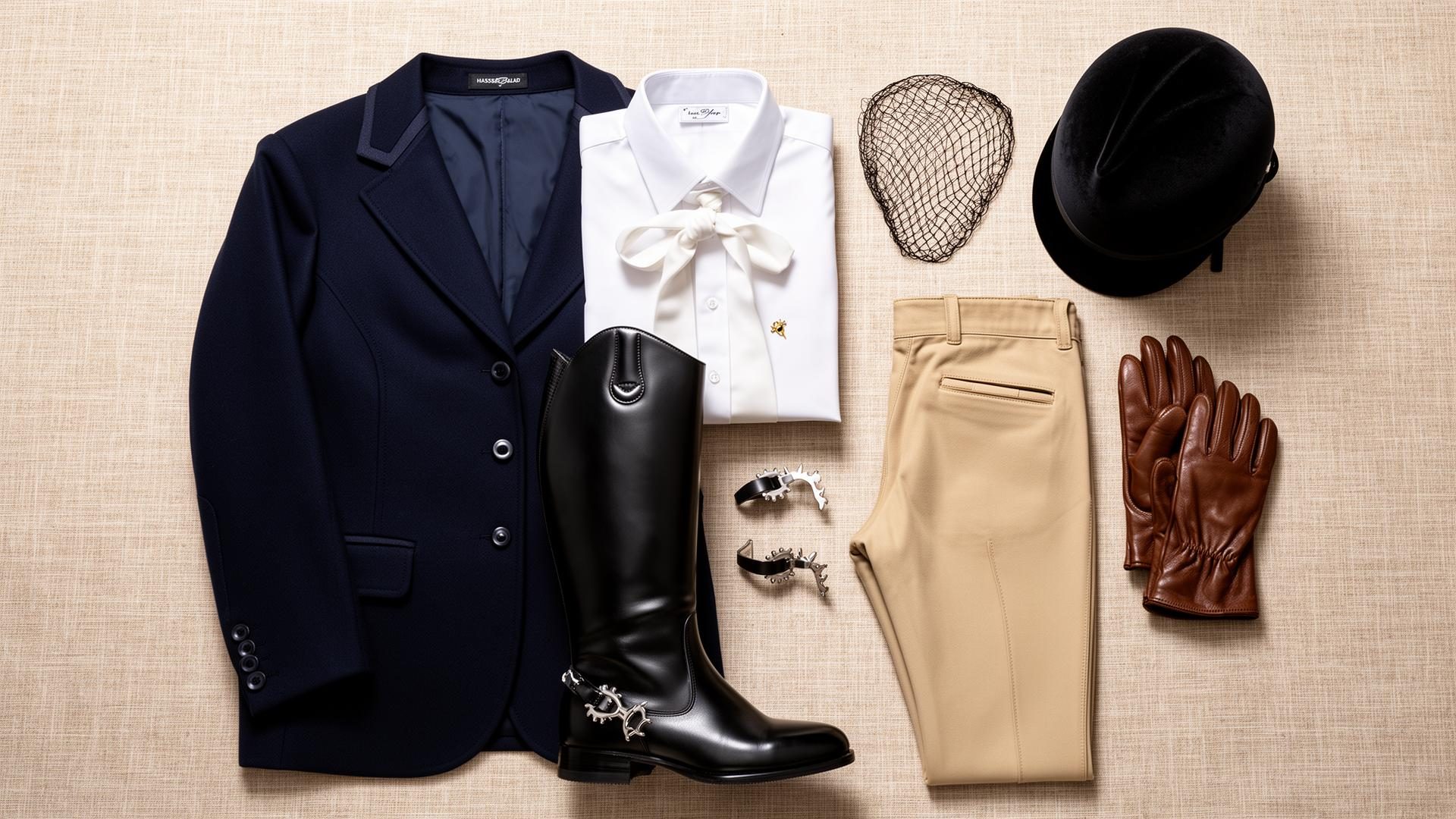
A proper English riding outfit hasn't really changed in a hundred years — and that's a feature, not a bug. The rules exist because they're functional. This is the complete guide to what an English rider actually wears, in the order you'd put it on, with the pieces that matter most for schooling, shows, and the disciplines in between.
Anatomy of an English riding outfit
From the top down, the canonical English outfit is: helmet, hairnet, show shirt with collar, stock tie or ratcatcher, show coat, breeches, tall boots with spurs, and gloves. For schooling, it loosens — a polo replaces the show shirt, half-chaps replace tall boots, and the coat comes off.
Helmet
Black velvet or matte for hunters and dressage; matte synthetic with vents for jumping. Make sure it's certified (ASTM/SEI in the US, PAS 015 in the UK) and replaced every five years, or immediately after any fall.
Show shirt and collar
A long-sleeved technical show shirt with a high mandarin collar has become the modern standard in hunter, jumper, and dressage rings — cooler than the old cotton shirts, with a built-in or detachable collar that takes a magnetic monogram. For traditional hunting, the collar becomes a stock tie pinned with a plain gold or silver pin.
Show coat
Hunters and equitation: conservative navy, dark green, or black, tailored close through the body. Dressage: black or dark navy, slightly longer cut, sometimes with subtle piping. Jumpers: more permissive — navy, grey, even burgundy or tweed, depending on the level. The cut matters more than the colour. A coat that pulls across the shoulders looks wrong no matter the brand.
Breeches
For showing: white in dressage above training level, beige or tan everywhere else. Full-seat (for dressage) or knee-patch (for jumping). For schooling: any colour that hides arena dirt — navy, grey, black, olive.
Tall boots and spurs
Black dress boots are standard across English disciplines. They should fit snugly around the calf and drop slightly when broken in — a stiff new boot that sits an inch above the knee is the right starting fit. Spurs (when used) should match: silver Prince of Wales for hunters and dressage, roller or knob spurs for jumping.
Gloves
Black or dark brown for showing. Schooling: whatever colour and grip you like. A proper riding glove is thin, close-fitting, and lets you feel the reins. Driving gloves and fashion leather don't work.
Schooling outfit, simplified
- Schooling breeches with knee or full-seat grip.
- Technical polo or sun shirt.
- Paddock boots with half-chaps (or tall schooling boots).
- Schooling helmet, vented in summer.
- Gloves.
That's it. Anyone telling you it needs to be more complicated is selling you something.
From the ecosystem
Equestrian Star is part of the Horse Lovers Connection family of sites. It's a modern equestrian fashion edit — apparel and rider lifestyle pieces that actually translate from the stable to the rest of your day.
Shop the editQuick reference: discipline differences
- Hunters: conservative, tailored, dark coat, beige breeches, black boots.
- Jumpers: more colour and personality permitted; safety helmet mandatory at most heights.
- Dressage: white breeches, white shirt, dark coat, top hat or helmet by level.
- Eventing: coat for dressage phase, polo and body protector for cross-country.
- Foxhunting: traditional hunt colours, stock tie, hunt cap or helmet — strict club rules apply.
If you ride in more than one discipline, you'll need more than one outfit. Start with what you actually compete in.
Frequently asked questions
What colour breeches should I wear for a hunter show?
Beige or tan. White breeches are reserved for dressage above training level. Grey or olive breeches are acceptable for jumpers and schooling but never for the hunter ring.
Do I need a show coat to compete?
Yes, for most rated shows and any dressage competition above the lowest level. Many unrated schooling shows allow polos instead of coats, especially in hot weather. Always check the prize list before you pack.
How tight should tall boots be when new?
Tight enough that they sit an inch above your kneecap when fully on and stiff enough that you struggle to bend your ankle. After 10–20 hours of riding, they soften and drop into the correct position — sitting just below the kneecap.
Are matte or shiny helmets more correct?
Either is correct in most rings now. Matte synthetic helmets dominate jumping; velvet or matte velvet remains traditional in hunter and dressage. Pick the one you'll actually wear every day — the safest helmet is the one on your head.
More from Horse Lovers Connection: All articles · Guides · Equestrian brands
This article is general guidance for equestrians, not professional advice. Always consult a qualified vet, attorney, or trainer for decisions specific to your situation.