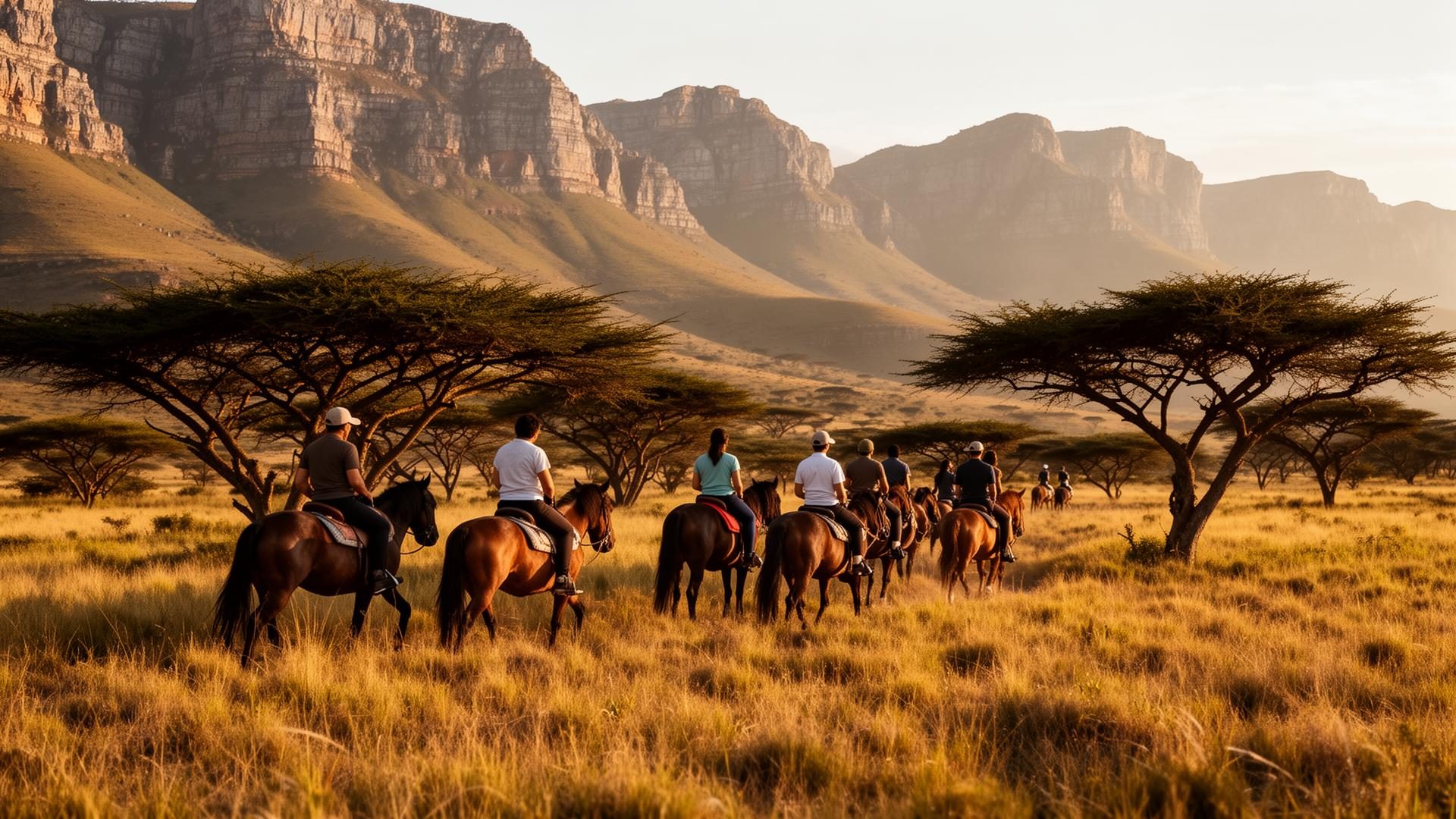
South Africa is one of the most under-rated horse riding destinations in the world. You get European-quality horses and instructors, African landscapes most riders only see in documentaries, and an exchange rate that makes a two-week trip cost what a long weekend does in Tuscany. This is a real guide to planning one.
When to go
South Africa rides year-round, but each region has its window. The Western Cape is at its best from October to April (the Southern Hemisphere's summer and autumn). KwaZulu-Natal and the Drakensberg are spectacular from March to May and again in September–November, when the grass is still green and the days are mild. Avoid the peak of summer in the Karoo unless you enjoy 40°C in the saddle.
The four regions worth flying for
1. Western Cape — wine country and Atlantic beaches
Rides combining vineyard estates around Stellenbosch and Franschhoek with long canters on the wide beaches of the Cape coast. Comfortable, scenic, easy to combine with a non-rider partner who wants Cape Town.
2. Drakensberg — mountains and Basotho trails
Surefooted Basuto ponies along the mountain escarpment, with overnight stays in traditional rondavels. This is the trip for riders who want a proper expedition rather than a tour.
3. Waterberg and Limpopo — big-game safari on horseback
Riding alongside giraffe, zebra, wildebeest and antelope in malaria-free reserves. Standards are high; most operators require a confident rider who can canter comfortably out of a group.
4. KwaZulu-Natal — Indian Ocean beach rides
Long stretches of empty coastline, warm water, and small private stables that mix bushveld and beach in a single ride.
What level do you actually need to be?
Most safari-style rides require an intermediate rider — comfortable at walk, trot, and canter, able to control a forward horse in open country. Beach rides and wine estate trails are generally beginner-friendly. Mountain trails sit in the middle: not technical, but long days in the saddle.
Be honest about your level on the booking form. South African operators are good, but they put riders on horses based on what you tell them.
What it actually costs
A full-board, all-inclusive riding week in South Africa typically runs noticeably cheaper than the European equivalent — often half the price of a comparable Spanish or Portuguese trail. Add international flights, a few rest days, and a rental car for flexibility, and a two-week trip is achievable on a mid-range budget.
Logistics that catch first-timers out
- Helmets. Bring your own. Standards vary; you don't want to discover that on day one.
- Half-chaps and gloves. Worth packing — most rentals are tired.
- Visa. Many passports get visa-free entry, but check before booking flights.
- Travel insurance with riding cover. Standard policies often exclude horseback riding. Read the small print.
From the ecosystem
SA Horse Sales is part of the Horse Lovers Connection family of sites. It's the place to start if you want to go deeper — connecting visitors with South African breeders, riding centres, and the people who actually know the trails.
Explore South African equestrianFrequently asked questions
When is the best time of year to ride in South Africa?
The shoulder seasons — March to May and September to November — work for most of the country. The Western Cape is at its best from October to April; safari regions in Limpopo and the Waterberg are best in the dry winter months of May to September.
Do I need to be an experienced rider for a South African safari ride?
Safari rides usually require an intermediate rider who can confidently walk, trot, and canter out of a group in open country. Beach rides and vineyard trails are generally suitable for beginners. Always be honest about your level on the booking form — operators match horse to rider based on what you say.
How much does a riding holiday in South Africa cost?
An all-inclusive 7-day riding week typically costs significantly less than a comparable European trip — often around half — plus international flights. Mid-range total budgets sit between $2,500 and $5,000 per person for the full trip including travel.
Is it safe to ride near big game?
Yes, on properly run reserves. Reputable operators ride only in malaria-free reserves, with experienced guides, and never approach dangerous species. The horses are habituated to wildlife and stay calm around plains game like giraffe, zebra, and wildebeest.
More from Horse Lovers Connection: All articles · Guides · Equestrian brands
This article is general guidance for equestrians, not professional advice. Always consult a qualified vet, attorney, or trainer for decisions specific to your situation.