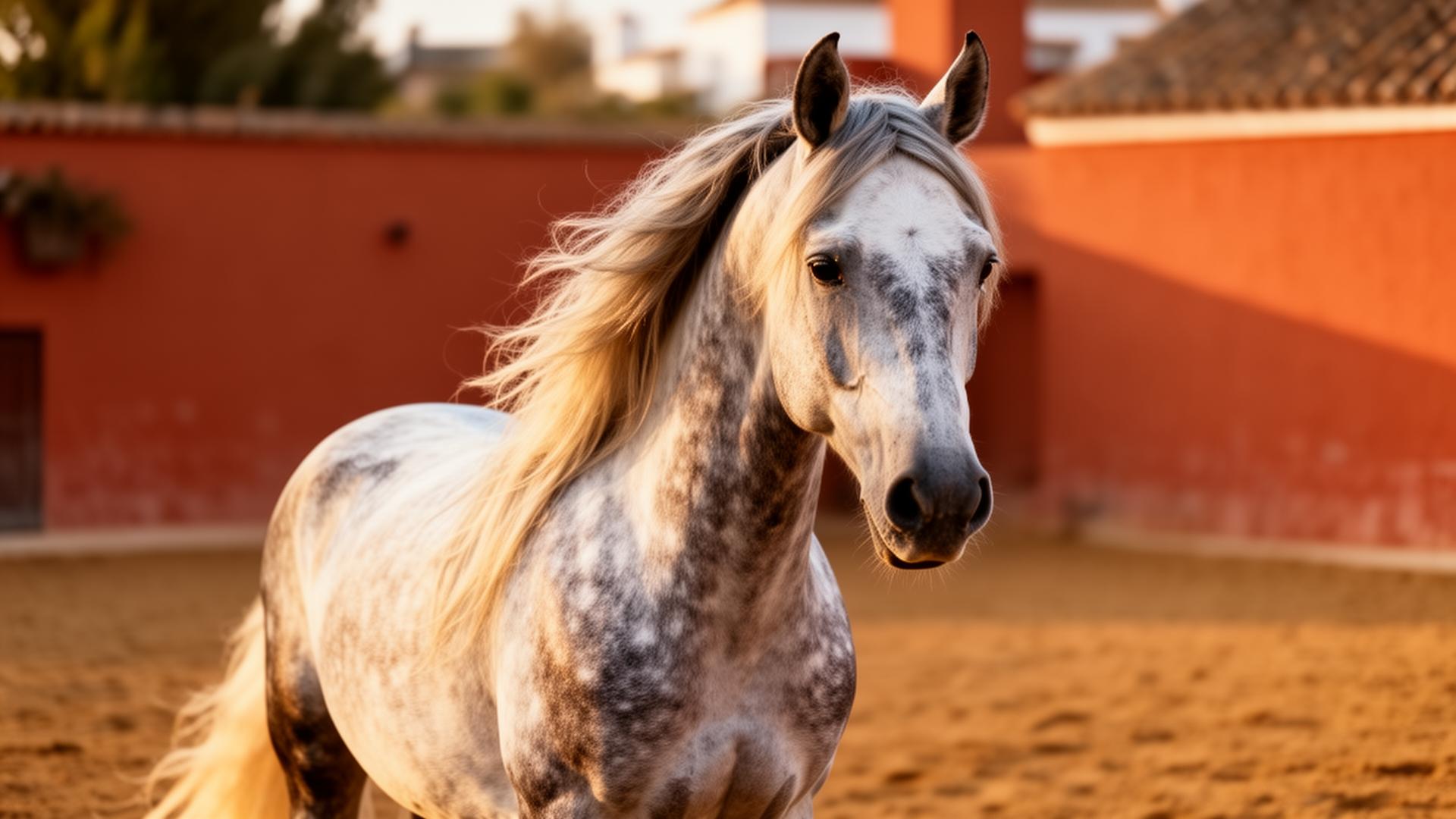
The PRE — Pura Raza Española — is one of the oldest recognised horse breeds in the world and the closest living link to the warhorses that carried European cavalry for four centuries. Most riders meet them through Andalusian fairs, classical dressage, or the films they keep ending up in. This is a proper breed guide for anyone thinking about owning one.
What exactly is a PRE?
"PRE" is the registered, stud-book-controlled name for the Andalusian horse: a Spanish baroque breed defined by a strong, arched neck, long mane and tail, compact muscular body, and the famously expressive, willing temperament. To be registered as a PRE, a horse must be born to two PRE parents and inspected and graded by the Spanish Ministry of Defence's stud book (LG ANCCE).
The "Andalusian" label gets used more loosely in English-speaking countries. If pedigree and resale value matter to you, look for a horse with full PRE papers — not just "Andalusian type."
Temperament: why riders fall for them
PREs are sensitive, intelligent, and unusually people-oriented. They learn quickly, tolerate quiet amateur riders well, and tend to bond hard with their person. That sensitivity is also their challenge: a PRE will mirror tension in the saddle faster than most warmbloods. They reward soft hands and clear aids.
What they're good at
- Classical dressage. Their natural collection is unmatched.
- Working equitation. They were bred for cattle work and it shows.
- Display and parade. Movement, presence, and mane for days.
- Trail and pleasure. Sensible heads, sound feet, calm in open country.
They are not ideal for high-level show jumping or eventing — the conformation that gives them collection works against them over big fences.
Buying a PRE: what to know
The breed's heartland is Andalusia — particularly Jerez de la Frontera, Seville, and Cordoba — where most serious breeders operate. Prices range from accessible amateur horses to six-figure breeding stallions, and the gap between "looks like a PRE" and "graded PRE with strong bloodlines" is wide.
If you're buying internationally, you need three things: PRE papers (the green book or electronic registration), a thorough pre-purchase exam, and someone on the ground in Spain who knows breeders and bloodlines. Buying a PRE sight unseen from a generic marketplace listing is one of the most common ways to end up with the wrong horse.
From the ecosystem
Sarah's Spanish Horses is part of the Horse Lovers Connection family of sites. It's a personal, in-country sourcing service that's spent years working with Andalusian breeders — the kind of relationship you can't replicate from a marketplace listing.
Discover Spanish horsesRiding in Spain: the easiest way to meet them
Before you buy, ride them. Andalusia is full of riding holidays built specifically around PREs — from short stays at working equitation schools in Jerez to multi-day trail rides through the sierras. A week in the saddle on different PREs is the best possible due diligence on whether the breed suits you.
Frequently asked questions
What's the difference between a PRE and an Andalusian?
PRE (Pura Raza Española) is the formal, stud-book-controlled name. To be registered as a PRE, the horse must be born to two PRE parents and inspected by the Spanish stud book (LG ANCCE). 'Andalusian' is used more loosely in English-speaking countries and can include horses without full PRE papers.
Are PRE horses good for beginners?
PREs are sensitive and people-oriented, which can suit a calm, soft-handed beginner — but their reactivity means they reward riders who are quiet in the saddle. They are generally a better second or third horse than a true first horse.
How much does a PRE horse cost?
Prices range widely. Riding-quality PREs typically start around €8,000–€15,000 in Spain. Graded broodmares, proven competition horses, and top breeding stallions can reach six figures. Add 15–25% for international transport, import paperwork, and quarantine if buying from outside the EU.
Can PRE horses jump?
They can jump small fences happily, but their baroque conformation — short back, strong hindquarters, upright shoulder — is built for collection, not scope. For serious show jumping, a warmblood will outperform them. For working equitation or low-level jumping for fun, they're perfectly capable.
More from Horse Lovers Connection: All articles · Guides · Equestrian brands
This article is general guidance for equestrians, not professional advice. Always consult a qualified vet, attorney, or trainer for decisions specific to your situation.