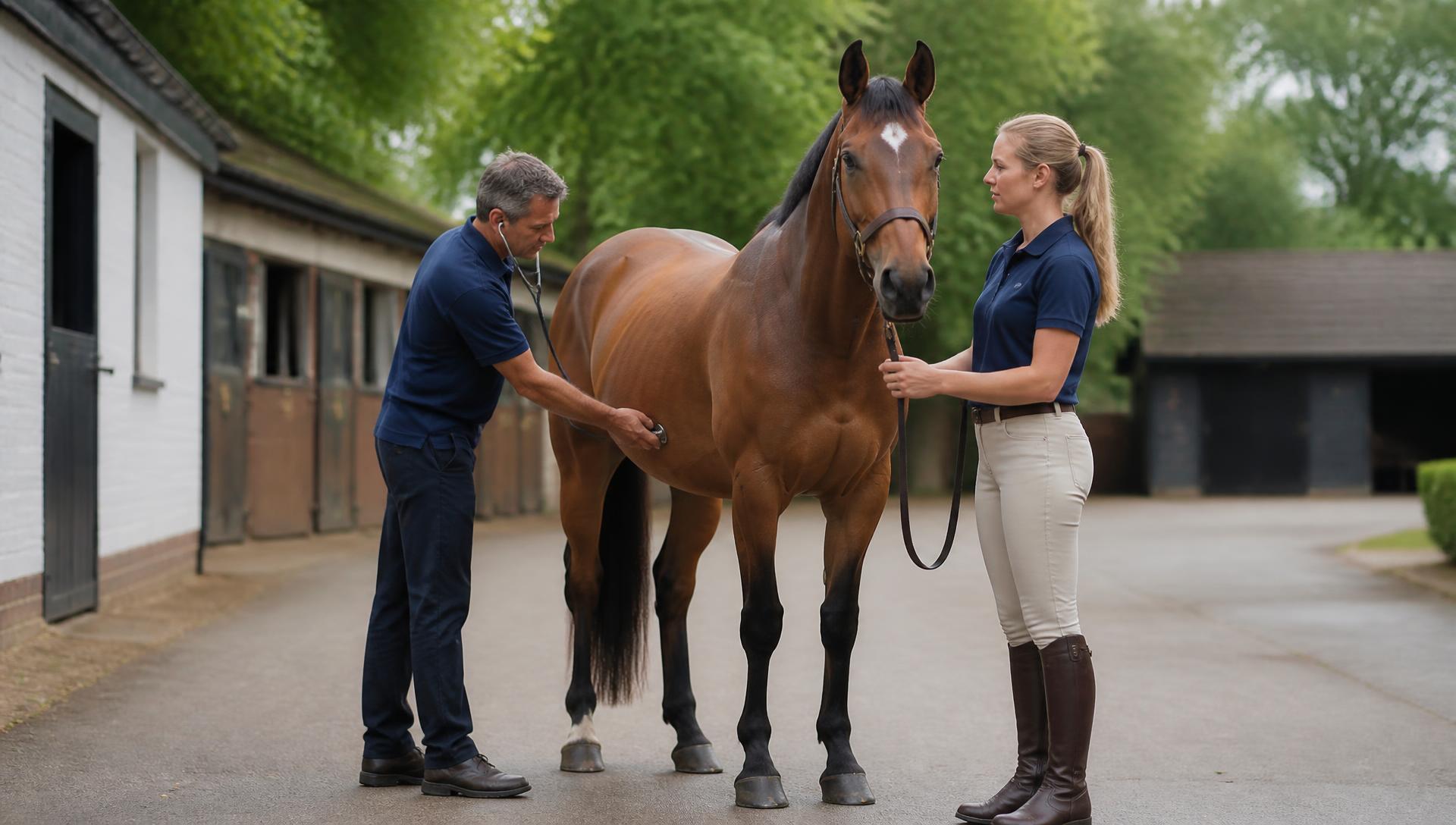
The pre-purchase exam (PPE, or "vetting" in the UK) is the most important hour of any horse purchase — and the part most first-time buyers either skip or under-spec. This is what a proper PPE covers, what it costs, what the results actually mean, and how to read the report without panicking.
What a pre-purchase exam actually is
A PPE is a structured veterinary evaluation of a horse on the day, conducted by a vet hired by the buyer, before money changes hands. It's not a guarantee of future soundness. It's a snapshot — a professional opinion about the horse's current condition and the risks visible on that day.
A clean PPE doesn't mean the horse will stay sound. A PPE with findings doesn't mean you walk away. It means you make the next decision with information.
Who should do it
Not the seller's vet. Hire an independent vet — ideally one recommended by your trainer or by a buyers' agent in the region. For an international purchase, hire a vet local to the seller and have the report reviewed by your home vet.
The five stages of a standard PPE
- Static exam. Eyes, heart, lungs, skin, conformation, teeth, hooves assessed at rest.
- Walk and trot in hand. On hard, level ground, in straight lines and circles. Looking for asymmetry, lameness, and how the horse moves out of stiffness.
- Strenuous exercise. Lunge or ridden work at trot and canter, with the heart and breathing monitored before, during, and after.
- Recovery. Heart rate and breathing rechecked after the exercise phase.
- Second trot-up. Re-evaluated on hard ground after recovery, to see what exercise revealed.
This is the basic five-stage exam. Anything less is not a full PPE.
Imaging: when, and how much
Standard X-ray set for a sport horse: front feet (navicular, coffin bone), front fetlocks, hocks, and stifles. Add the back if you're buying a dressage horse. Add the neck if you're buying a jumper. Ultrasound of suspect tendons or ligaments is included only if the clinical exam flags something.
Bloodwork should always include drug-screening (to rule out the horse being chemically quieted on the day). A standard chemistry panel is sensible on any horse over 12.
What it costs
Basic five-stage PPE without imaging: $300–$600. Standard imaging package (8–14 X-rays plus drug screen): $600–$1,500. Full advanced PPE for a high-value sport horse (extensive X-rays, ultrasound, scope, bloodwork): $1,500–$3,500+.
Spend more on the PPE than you think you need to. It's the cheapest insurance in the entire purchase.
How to read the results
A PPE report is a list of findings, not a pass/fail grade. Three questions to ask your vet:
- Which findings are normal age-related changes vs. genuine concerns?
- Given the discipline I want to do, which findings change the risk profile?
- What would each finding likely cost to manage over the next five years?
Then you decide. Plenty of professional horses go on competing for years with mild radiographic changes; some apparently perfect horses break down at six. The PPE narrows the odds, it doesn't eliminate them.
After the PPE: keep the records
Whatever the result, the PPE report becomes the baseline of your new horse's medical history. Store it digitally alongside vaccination records, farrier dates, and insurance paperwork from day one — it's the foundation of every future soundness decision.
From the ecosystem
My Horse Base is part of the Horse Lovers Connection family of sites. It's a modern stable management platform built for exactly this — PPE records, vet history, farrier logs, pedigrees, and every horse in your barn in one place.
Manage your stableOnce you've bought
Read our monthly cost guide and, if you board, our horse boarding contract guide. The PPE was the test. Ownership is the exam.
Frequently asked questions
How much does a pre-purchase exam cost?
A basic five-stage exam without imaging runs $300–$600. A standard package with X-rays and drug screen costs $600–$1,500. A full advanced PPE on a high-value sport horse — with extensive radiographs, ultrasound, and bloodwork — can reach $1,500–$3,500 or more.
Can a horse fail a pre-purchase exam?
Not technically. A PPE produces findings, not a pass or fail. The vet describes what they see and discusses risk; the buyer decides whether to proceed. A horse with mild findings can still be a great buy for the right discipline.
Should I use the seller's vet for the PPE?
No. The PPE must be done by a vet you hire, not the seller's regular vet. The whole point is an independent opinion. For international purchases, hire a vet local to the seller and have the report reviewed by your home vet.
What X-rays should I include in a PPE?
At minimum, front feet (navicular, coffin bone) and front fetlocks for any sport horse. Add hocks and stifles for jumpers and dressage horses, the back for dressage horses, and the neck for upper-level jumpers. Your vet should tailor the imaging to the discipline.
More from Horse Lovers Connection: All articles · Guides · Equestrian brands
This article is general guidance for equestrians, not professional advice. Always consult a qualified vet, attorney, or trainer for decisions specific to your situation.