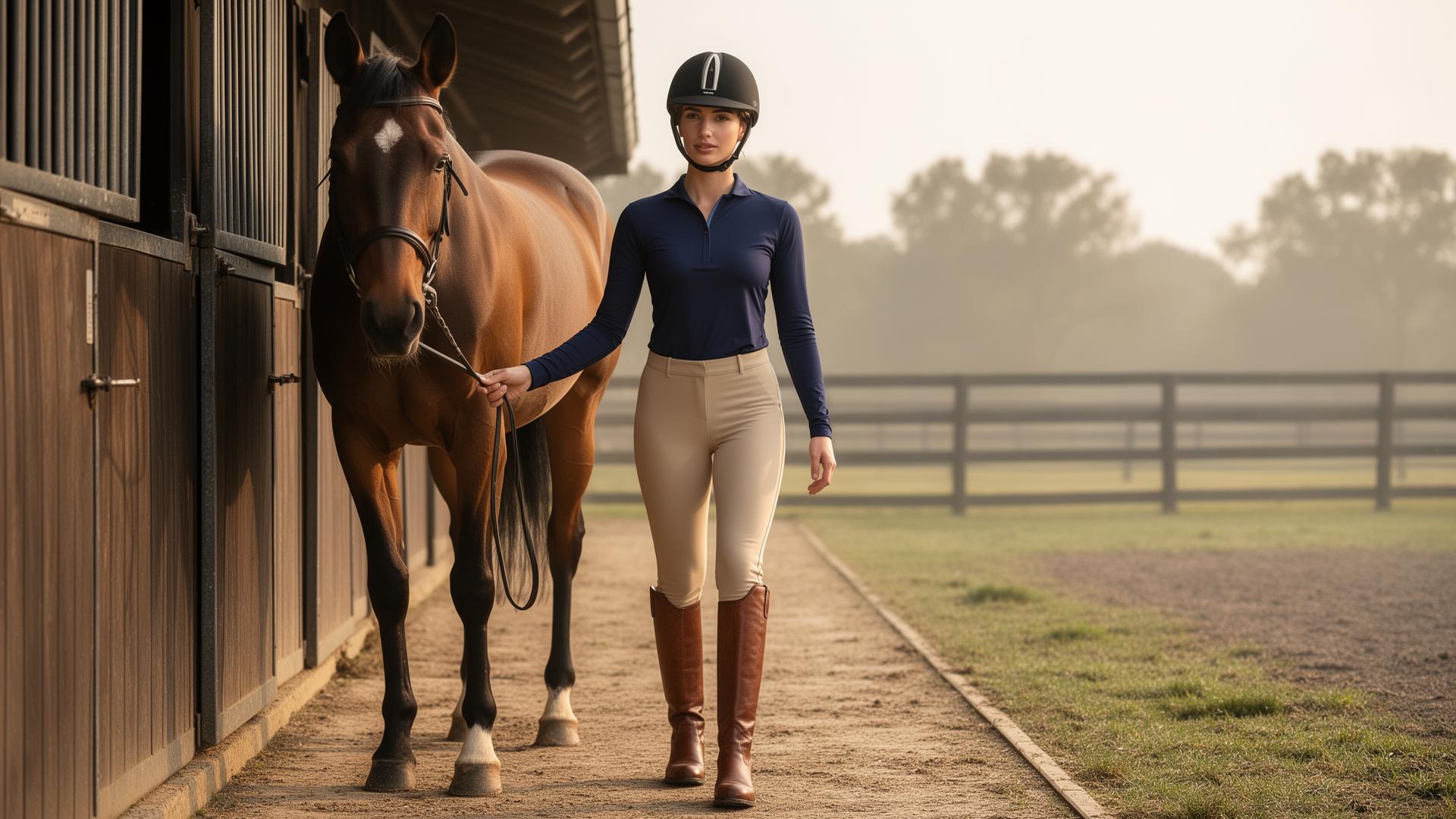
Walking into a barn for your first ride and not knowing what to wear is one of the small embarrassments of equestrian life. The good news: the answer is simpler than the catalogues suggest. Here's the complete, no-nonsense guide — for your first lesson, for trail rides, and for the moment you start caring how you look on a horse.
The non-negotiables (every ride, every time)
- A certified helmet. ASTM/SEI or PAS 015 (EU). Borrow one for your first lesson, buy your own as soon as you're hooked.
- Long trousers. Anything stretchy and seamless on the inner leg. Leggings work for your first lesson; jeans pinch.
- A heeled boot. A small (½–1 inch) heel stops your foot sliding through the stirrup. A short paddock boot or even a heeled ankle boot is fine for starting out.
- A close-fitting top. Nothing flapping, nothing the horse can grab.
That's the legal minimum. Everything below is upgrading the experience.
For your first lesson
Leggings or jeggings, a fitted t-shirt or long sleeve, ankle boots with a heel, hair tied back. Don't buy anything until you've ridden three or four times — you'll waste money on gear you don't need yet.
Casual English riding kit
Once you're riding regularly, the standard everyday English outfit is:
- Breeches or riding tights with knee or full-seat grip patches.
- A sun shirt or polo, fitted enough to tuck.
- Paddock boots with half-chaps, or tall boots if you have them.
- A schooling helmet (vented for summer).
- Riding gloves — the one piece of gear most beginners skip and regret.
For show day, this becomes a more formal outfit entirely — covered in our English riding outfit guide.
Casual Western riding kit
- Bootcut jeans (cut to sit over the boot, not under).
- A western shirt or fitted long sleeve.
- A cowboy boot with a defined heel.
- A certified helmet — or, if you ride traditional, a hat that won't fly off.
Dressing for the weather
Layers always. Stables are colder than they look in winter and hotter than they look in summer. A thin merino base layer in winter, a vented sun shirt in summer, and a waterproof shell that doesn't crinkle or flap in any season.
What not to wear
- Shorts (your skin will pinch against the saddle within ten minutes).
- Open-toed shoes anywhere on a yard.
- Anything flapping — scarves, loose ponchos, long open coats.
- Jewellery you'd cry to lose. Stables eat earrings.
- Strong perfume around sensitive horses.
From the ecosystem
Glamour Horse is part of the Horse Lovers Connection family of sites. It's where we cover the more aspirational side of equestrian style — what riders wear off the horse, the brands worth watching, and the lifestyle behind the sport.
Visit Glamour HorseFrequently asked questions
Can I wear jeans horseback riding?
For casual Western riding, yes — bootcut jeans worn over the boot are standard. For English riding, jeans pinch behind the knee and the inside seam rubs raw within an hour. Leggings or breeches are far more comfortable.
Do I really need a helmet for trail rides?
Yes. Most serious head injuries in equestrian sport happen at slow speeds in calm settings — a horse spooks, a rider falls, the ground is hard. A modern certified helmet weighs almost nothing and reduces head injury risk significantly.
What shoes can I wear if I don't own riding boots?
Any close-toed shoe with a small (½–1 inch) heel and a smooth sole. Ankle boots, Chelsea boots, or short hiking boots with a defined heel work fine for a first lesson. Avoid sneakers — they slip through the stirrup.
Do I need to wear gloves to ride?
Not legally, but most riders quickly realise they wish they did. Gloves protect your hands from rope burn, blisters from reins, and the cold — and they make rein contact more consistent. The single most underrated piece of kit for new riders.
More from Horse Lovers Connection: All articles · Guides · Equestrian brands
This article is general guidance for equestrians, not professional advice. Always consult a qualified vet, attorney, or trainer for decisions specific to your situation.